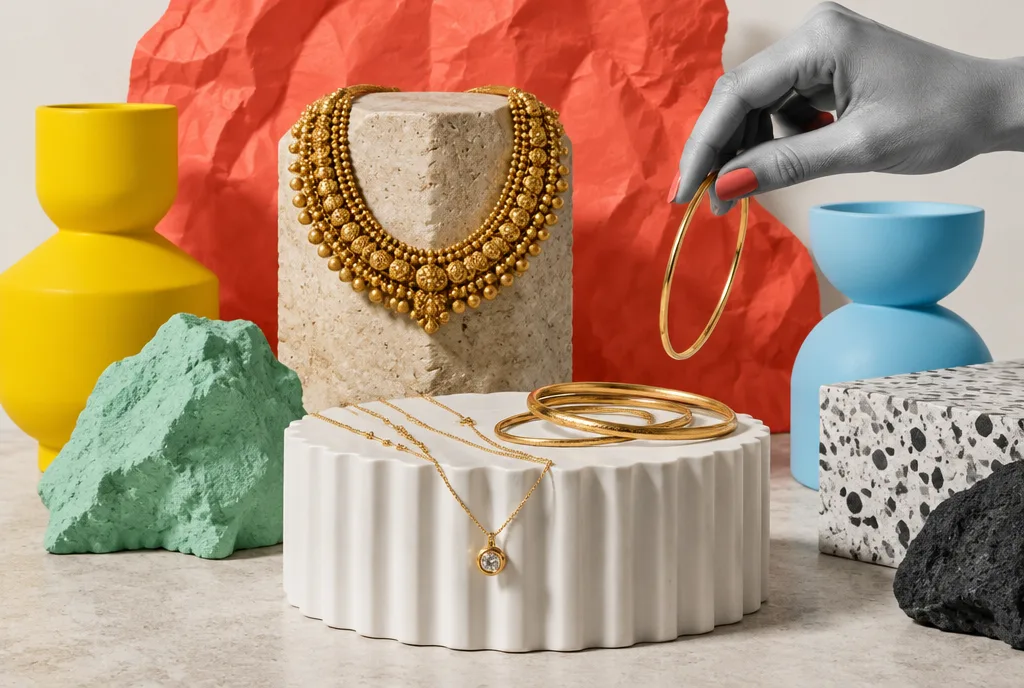
Lightweight jewellery, lower-carat ranges and studded pieces are how Indian jewellers are holding on to buyers at record gold prices. The World Gold Council (WGC) says India bought 75.1 tonnes of gold jewellery in April to June 2026, 15% less than a year earlier, yet spent 34% more on it, about ₹1,13,210 crore.
Why record prices push lightweight jewellery to the front
The WGC's India Focus for Q2 2026, published on 30 July, says domestic gold prices stayed 59% higher than a year earlier, held up by the mid-May import duty increase and a weaker rupee. Tonnage did recover 14% from a weak first quarter, but the year-on-year fall was steep. The council says high prices were "accelerating the shift towards lighter-weight, lower-carat and studded jewellery".
Prices kept climbing after the quarter closed. In its September market update, the WGC said domestic prices rose 12% in August to ₹1,58,854 per 10 grams, and that "anecdotal reports point to a structural shift towards lighter-weight jewellery". The same update said the large retailers had seen comparatively stronger demand.
The logic is simple. When the price per gram rises faster than budgets, a buyer who wants a familiar design at a familiar ticket size needs fewer grams, a lower purity, or more of the value carried by stones. Each of those is now a design and sourcing decision for the jeweller, not only a shopper preference.
What Titan's numbers show about lighter, lower-carat pieces
Titan's Q2 FY27 business update, filed on 6 October, shows the pattern inside one large chain. Its jewellery portfolio grew about 21% in July to September. Studded jewellery grew in the early thirties, helped by its Festival of Diamonds and brand-level promotions, while plain gold jewellery grew about 20%. Coins fell by a high single-digit percentage off a high base. Buyer growth was in mid-single digits, while average ticket sizes grew in double digits.
Management had already set out the playbook. On the Q1 FY27 earnings call on 7 August, Arun Narayan, CEO of the Jewellery Division, said "accessibility comes from keeping it lightweight, looking at a variety of karatages, looking at an exchange program that is strong to get them to recycle." Chief financial officer Ashok Sonthalia said that lower karatages jewellery "generally have a positive impact on margin", and listed lower caratage among the company's gross-margin levers alongside sourcing strategies.
Titan also flagged a timing effect: demand softened towards the end of September because part of the festive calendar shifted into the October to December quarter.
What lightweight jewellery means for retail ranges
For jewellery retailers, three points follow from the primary data.
- Range by ticket, not by weight. With tonnage down and value up, the same shopper budget now buys fewer grams. Ranges built around price bands let a store keep its entry ticket steady as gold moves.
- Lower carat is a margin lever as well as a price lever. Titan's CFO tied lower karatages to better margins, which gives chains a reason to grow these lines beyond the current price cycle.
- Studded growth is outpacing plain gold. At Titan, studded grew faster than plain gold in Q2, and the WGC names studded jewellery as part of the same shift.
Inventory is the risk. The WGC's September update said retailers had been cautious about building stock and were "refining their strategies to favour faster-moving products". Lighter pieces at sharper price points can move faster, but chasing volume with promotions has its own cost, as we set out in when discounts stop driving profitable growth.
Old gold is the other half of the story. Exchange schemes now fund a large share of jewellery purchases, a trend Titan's jewellery chief tied directly to keeping the category accessible.
Questions this story answers
Why are jewellers selling more lightweight jewellery?
Gold prices in India were 59% higher year on year in Q2 2026, according to the World Gold Council. To keep designs within shoppers' budgets, jewellers are offering lighter-weight, lower-carat and studded pieces, a shift the council says high prices are accelerating.
How much did India's gold jewellery demand fall in Q2 2026?
The World Gold Council puts Q2 2026 jewellery demand at 75.1 tonnes, down 15% year on year but up 14% from a weak first quarter. The value of that demand rose 34% to about ₹1,13,210 crore because prices were much higher.
What did Titan report for jewellery in Q2 FY27?
Titan said its jewellery portfolio grew about 21% in July to September 2026. Studded jewellery grew in the early thirties and plain gold about 20%, while coins declined. Buyer growth was mid-single digit and average ticket sizes grew in double digits.