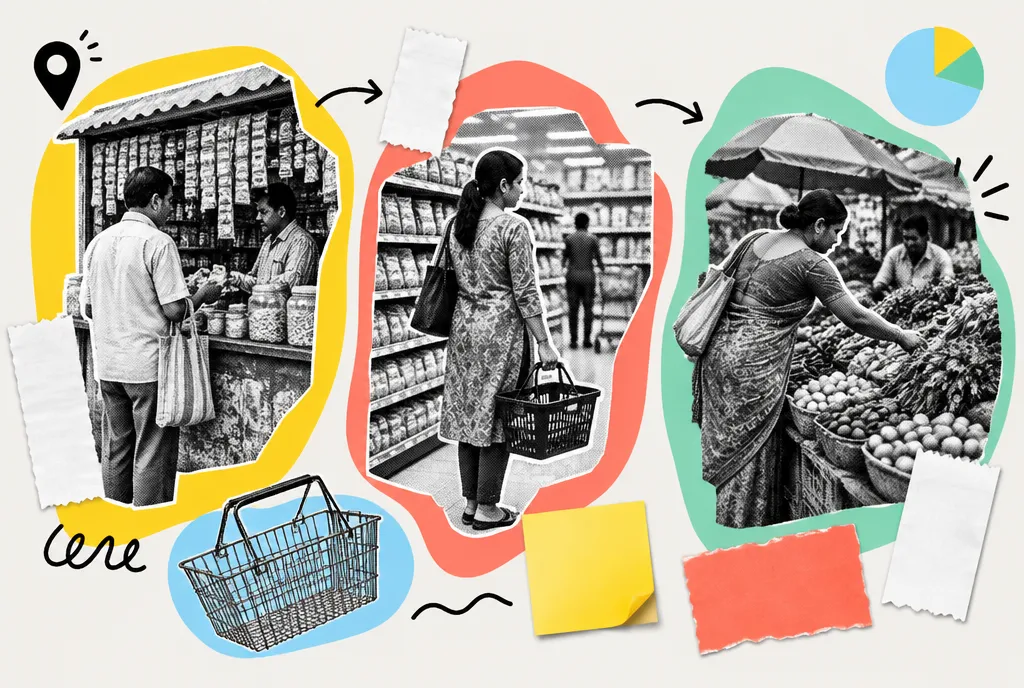
'Bharat' has become convenient shorthand in boardrooms and investor presentations. It usually means consumers outside the largest metros: in tier-2 and tier-3 cities, small towns and rural markets. As shorthand, it has its uses. As a consumer segment for planning assortment, pricing or store formats, it is too broad to be useful, and treating it as one can lead to expensive mistakes.
Why one consumer segment label hides several markets
The consumers grouped under the term differ on almost every variable that matters to a retailer. Income levels and income stability vary widely, from salaried households in growing industrial cities to farming households whose spending follows harvest cycles. Language, food habits, festivals and clothing preferences change from state to state. Climate shapes demand for personal care, apparel and beverages. Household size and joint-family living affect pack sizes and purchase frequency.
Retail access differs just as sharply. Some smaller cities have modern supermarkets, branded outlets, quick commerce and reliable online delivery. Others depend almost entirely on kirana stores, weekly markets and a nearby wholesale town. The same shopper may use all of these for different needs.
What goes wrong when segments are flattened
- Assortment: a range designed for an imagined average non-metro shopper may suit no actual market well.
- Price: assuming every smaller-city shopper wants the lowest price misses those willing to pay for quality, brand or convenience in specific categories.
- Format: a store format that works in one regional city may fail in another with a different shopping culture or retail density.
- Communication: a national campaign translated into regional languages is not the same as communication built for a regional audience.
What better segmentation looks like
More useful segments combine geography with behaviour. Relevant variables include city or district, income band and its stability, household composition, access to modern retail and digital payments, and category-specific habits. A consumer may be price-led in staples and brand-led in personal care, or trade up on festive purchases while economising week to week.
Evidence for this kind of segmentation comes from several sources: retailers' own transaction data by store, distributor sales by town, consumer panel research and primary fieldwork. Each has gaps. Transaction data shows what was bought, not what was wanted but unavailable. Panels may underrepresent smaller towns. Combining sources, and stating their limits clearly, is better than relying on any one of them.
The test for any retailer or brand is practical. It should be able to explain how its strategy differs between two non-metro markets in different states. If the honest answer is that it does not, the business is planning for a label rather than for customers, and its regional expansion will be priced and stocked for people who do not exist.
Questions this story answers
Why is Bharat not one consumer market?
Consumers outside the metros differ on almost every variable that matters to retailers: income level and stability, language, food habits, festivals, climate, household size and retail access. Treating them as one segment for assortment, pricing or formats can lead to expensive mistakes.
How should retailers segment non-metro consumers?
By combining geography with behaviour: city or district, income band and stability, household composition, access to modern retail and digital payments, and category-specific habits. A shopper may be price-led in staples and brand-led in personal care.
What data helps segment smaller-city shoppers?
Retailers' own transaction data by store, distributor sales by town, consumer panel research and primary fieldwork. Each has gaps: transaction data misses unmet demand and panels may underrepresent smaller towns, so combining sources and stating their limits works best.