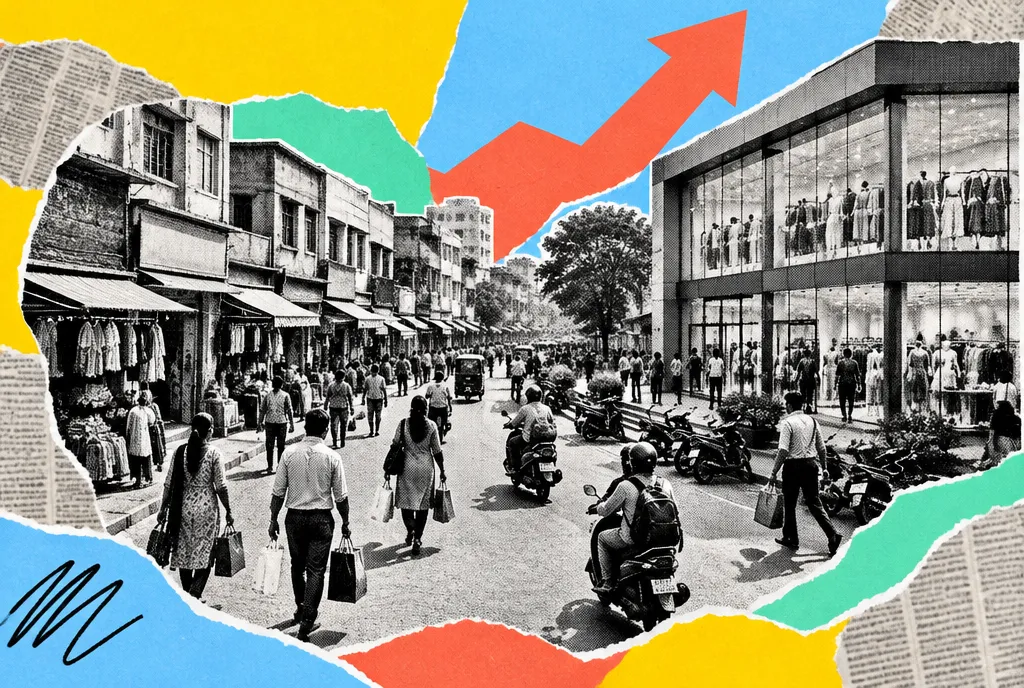
Store expansion announcements tend to arrive as a list of cities. The list rarely explains the decision behind each entry. For retail chains choosing between another outlet in a metro suburb and a first outlet in a regional city, the calculation turns on rent, catchment, supply reach and the time a store needs to pay back its fit-out. Those variables have shifted enough that the map of new openings deserves closer reading.
Why regional cities enter retail chains' plans
The case usually starts with occupancy cost. Rentals on established metro high streets and in prime malls absorb a large share of a store's sales, and that share rises when trading falls short of the lease assumptions. In many regional cities the same format can be leased at a lower cost per square foot, which lowers the sales a store needs to break even. Lower rent is not a reason on its own, though. A cheaper lease in a thin catchment can still lose money.
The second factor is demand that already exists. Chains look for evidence that shoppers in a city are buying the category, whether through online orders shipped to local pin codes, the performance of franchise or multi-brand partners, or traffic at nearby organised retail. Online sales data has become a practical scouting tool: a cluster of deliveries tells a retailer where its brand is known before it signs a lease.
The third is supply reach. A store is only as good as its replenishment. Cities on the route of an existing distribution centre are cheaper to serve, which is why many chains expand along corridors rather than in scattered points.
Which formats travel
Not every format moves well. Large stores need a wide catchment and strong weekend traffic. Smaller formats, with tighter assortments and lower capital per site, are easier to test and easier to close. Retailers entering a new region often lead with the smaller box, then revisit the larger one once they understand local baskets, price sensitivity and the seasonality of festivals and harvests.
Format choice also reflects staffing. Hiring and training store teams in a city where the chain has no presence takes time, and cluster expansion lets one regional manager oversee several stores within a day's travel.
What would settle the question
Announcements measure intent. The evidence that matters is store-level: how quickly regional outlets reach break-even, how their sales per square foot compare with metro stores in the same chain, and whether like-for-like growth holds after the opening months. Closures and relocations in a store's early years are as informative as openings, because they show where the site model failed.
The figure to watch is the gap between gross openings and net additions. A chain opening many stores while quietly shutting others is still learning its location model. A chain whose regional stores mature at or above metro productivity has found something its competitors will try to copy.
Questions this story answers
Why are retail chains opening stores in regional cities?
Occupancy cost is usually the starting point, since the same format can often be leased more cheaply per square foot outside metro high streets and prime malls. Chains also look for existing demand, such as online orders to local pin codes, and for cities on the route of an existing distribution centre.
Which store formats work best when entering a new region?
Smaller formats with tighter assortments and lower capital per site are easier to test and easier to close. Retailers often lead with the smaller box, then revisit the larger one once they understand local baskets, price sensitivity and the seasonality of festivals and harvests.
How can you tell if a chain's regional expansion is working?
Look at store-level evidence: how quickly regional outlets reach break-even, how their sales per square foot compare with metro stores, and whether like-for-like growth holds. Closures among new stores and the gap between gross openings and net additions also show whether the location model works.