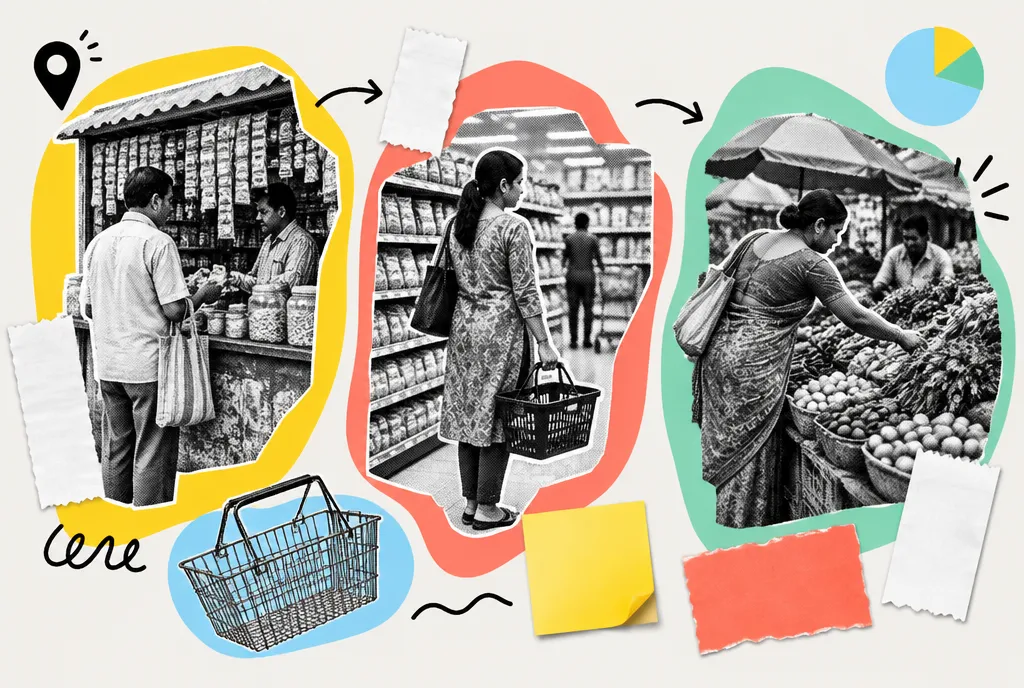
Indian shoppers have more ways to buy everyday goods than ever: the neighbourhood kirana, the supermarket, the wholesale store, marketplaces and quick commerce apps that deliver in minutes. Each channel offers a different mix of price, speed, assortment and effort. The common framing is convenience vs affordability, as if shoppers pick one. In practice they trade the two differently by occasion, category and household.
Convenience vs affordability: purchases are missions, not identities
A household rarely belongs to a single channel. The same family may do a large monthly stock-up of staples at a supermarket or wholesale store where unit prices are lower, top up milk, bread and vegetables at a nearby kirana, and order a forgotten ingredient or a late-night snack through a quick commerce app. The channel follows the mission.
That changes what retailers are competing on. For a planned stock-up, price per unit and bulk packs carry weight, and shoppers will spend time travelling. For an urgent top-up, the cost of time and effort dominates, and shoppers tolerate higher prices or delivery fees. Many purchases sit in between, and that is where channels compete hardest.
The hidden prices on both sides
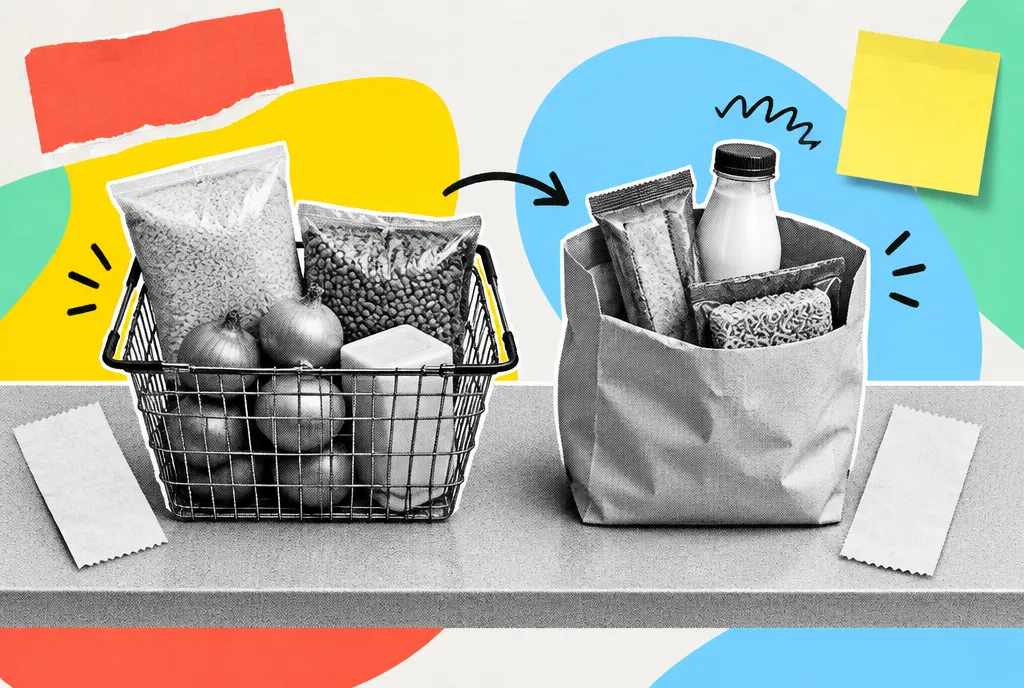
Shoppers weigh more than the shelf price. Convenience carries costs that are easy to miss: delivery and handling fees, small-basket charges, narrower assortment and smaller packs with higher unit prices. Value channels have costs of their own: travel time, transport, carrying heavy bags, queues and holding stock at home. A household's choice reflects how it values its time, its cash flow and its storage space.
Credit and relationships also shape choice. A kirana that extends informal credit, accepts very small purchases and delivers to the door competes on factors that never show up in a price comparison.
What operators are weighing
- Which missions a format can realistically win, rather than trying to win all of them.
- How pack sizes and price points line up with each mission.
- Whether delivery fees and minimum order values push shoppers toward larger baskets or away from the channel.
- How quick commerce is resetting shoppers' reference prices for everyday items.
The evidence that would settle the question is basket-level data across channels: what shoppers buy, where, at what price and on which occasion. Single-channel data cannot show substitution between channels. Consumer panels and shopping diaries can, though with their own limits on recall and representation.
The trend to watch is whether convenience permanently shifts expectations. If households that use quick commerce for top-ups begin moving planned purchases there too, the economics of stock-up formats will come under pressure. If they do not, convenience will remain a premium layer on top of value shopping rather than a replacement for it, and stock-up formats can compete on price with confidence.
Questions this story answers
Do Indian shoppers prefer convenience or low prices?
Neither, consistently. They trade price, speed, assortment and effort by occasion, category and household. A family may stock up on staples where unit prices are lower, top up at a nearby kirana and use quick commerce for a forgotten ingredient.
What hidden costs do shoppers weigh beyond price?
Convenience carries delivery and handling fees, small-basket charges, narrower assortment and smaller packs with higher unit prices. Value channels cost travel time, transport, carrying heavy bags, queues and holding stock at home. Choice reflects how a household values time, cash flow and storage.
Will quick commerce replace stock-up shopping?
The story says this is the trend to watch. If households move planned purchases to quick commerce, stock-up formats will face pressure. If not, convenience stays a premium layer on top of value shopping, and stock-up formats can compete on price.