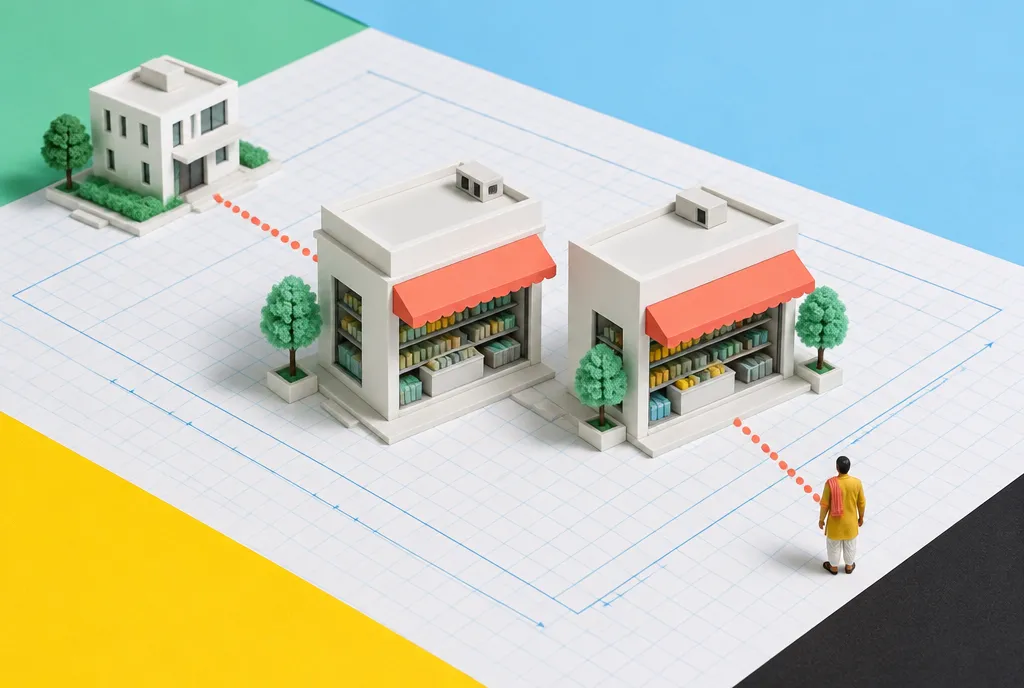
Store count is the easiest retail number to announce and the least informative. A chain with more stores has more rent, more staff and more inventory to manage. Whether that larger footprint produces a healthier business depends on store productivity: what each store earns from the space, stock and people it uses.
Three store productivity measures that matter
Sales per square foot divides a store's revenue by its trading area. It shows how hard the space works and allows comparison between stores of different sizes. Retailers usually calculate it on carpet or trading area rather than total built-up area, so definitions should be checked. A falling chain average during expansion means new stores trade below older ones.
Stock turnover measures how many times inventory is sold and replaced in a period, typically calculated as cost of goods sold divided by average inventory at cost. Faster turns release working capital and reduce the risk of ageing stock. A store with fewer turns needs more cash tied up for the same sales and is more exposed to markdowns.
Staff productivity is commonly expressed as sales per employee or sales per labour hour. It reflects rostering, store layout and how much time staff spend on tasks such as receiving stock rather than serving customers.
Why a bigger footprint can weaken a business
Expansion spreads fixed head-office costs across more stores, which helps. It also brings risks. New sites are often in weaker locations than early ones, because the best sites were taken first. Management attention is stretched. Inventory is spread thinner, which can leave each store short of the right sizes or variants even as total stock rises.
The result can be revenue growth with flat or falling profit. In disclosures this shows up as declining like-for-like sales, falling sales density and rising inventory days at the same time as the store count climbs.
What productive chains do differently
- They measure each store against the potential of its own catchment, not a chain average.
- They size new stores to expected demand rather than a standard template.
- They relocate or close underperforming stores rather than defending the count.
- They invest in replenishment so best-sellers stay in stock.
Productivity gains often come from existing stores: refining layouts, cutting slow-moving lines, matching staff rosters to traffic patterns and improving availability. These changes rarely make headlines, but they compound across a network.
The measure to watch in any chain's disclosures is the trend in sales per square foot alongside store additions. When the two rise together, expansion is adding healthy stores. When store count rises and density falls, the chain is buying growth with its margins, and the correction usually arrives later as a wave of closures.
Questions this story answers
How is sales per square foot calculated in retail?
It divides a store's revenue by its trading area, showing how hard the space works and allowing comparison between stores of different sizes. Retailers usually use carpet or trading area rather than total built-up area, so definitions should be checked before comparing.
What is stock turnover and why does it matter?
Stock turnover measures how many times inventory is sold and replaced in a period, typically cost of goods sold divided by average inventory at cost. Faster turns release working capital and reduce ageing stock risk; fewer turns tie up more cash and raise markdown exposure.
Can opening more stores make a retailer less profitable?
Yes. New sites are often weaker than early ones, management is stretched and inventory spreads thinner. This shows up as declining like-for-like sales, falling sales density and rising inventory days while store count climbs, and the correction often arrives later as closures.