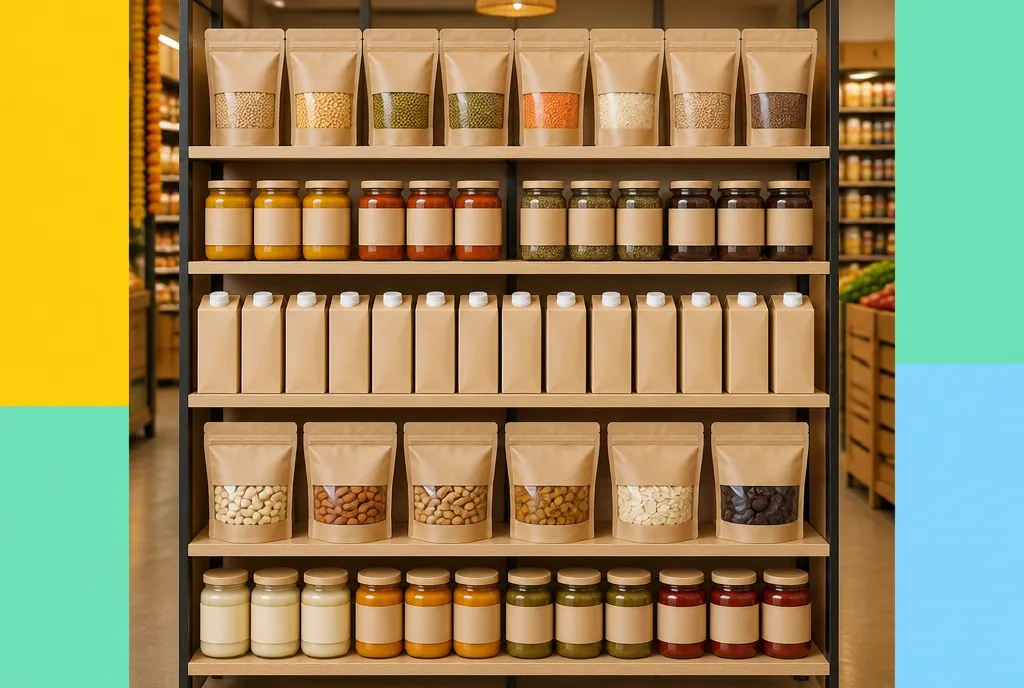
For a regional grocery chain, a branded packet of staples is a product it sells. A private-label packet of the same staple is a product it owns. That distinction explains why chains of modest size are investing in private labels, putting their own names on rice, pulses, spices, cleaning products and snacks, a move once associated mainly with national supermarket groups.
Where the margin on private labels comes from
A national brand's shelf price has to cover its advertising, its sales force, its distributor's margin and its own profit before the retailer takes a share. A private label strips out much of that. The retailer contracts a manufacturer or packer, specifies the product, pays for packaging and quality checks, and sells under its own name. Gross margin per unit is usually higher than on the branded equivalent, even when the private label is priced below it.
That headline margin is not the whole story. The retailer now carries costs a brand used to carry: product development, packaging design, minimum order quantities, quality testing, recalls and unsold stock. Minimum order quantities matter most for a regional chain. A manufacturer may require a production run that a chain with a limited store count takes many months to sell, which ties up working capital and leaves stock ageing on the shelf.
Trust is the asset at stake
Staples are bought on habit and trust. A shopper who has a bad experience with a chain's own-brand dal or atta does not just switch products. They may start to doubt the chain. Quality control is therefore not an operational detail. It is the core of the strategy. Chains that do this well usually start in categories where quality is easy to judge and specifications are easy to enforce, then expand once audit processes and reliable suppliers are in place.
The negotiating effect
Private labels also change the conversation with brand owners. A chain with a credible alternative on the shelf can ask for better trade terms, promotional support or display payments with more confidence. This works only if the private label actually sells. A weak own-brand product gives no leverage and takes shelf space from better-performing brands.
Operators are weighing several questions:
- Which categories have commodity-like specifications and stable sourcing.
- Whether volumes justify a dedicated supplier or a shared co-packer.
- How to price against both the national leader and the cheapest loose alternative.
- How much shelf space to shift without alienating important brand partners.
The measures that show whether a programme works are not its share of sales. They are repeat purchase on own-brand items, complaint and return rates, stock turn against branded equivalents, and any change in trade terms with brand suppliers. A programme that grows share while turning slowly is consuming cash, not creating margin.
The point to watch is whether regional chains begin pooling volumes, through buying groups or shared suppliers, to clear minimum order thresholds. That would mark the shift from experiment to structural strategy.
Questions this story answers
Why do private labels earn higher margins for grocery retailers?
A national brand's shelf price must cover advertising, a sales force, the distributor's margin and its own profit before the retailer's share. A private label strips out much of that, so gross margin per unit is usually higher than on the branded equivalent, even when priced below it.
What are the risks of private labels for regional chains?
The chain takes on product development, packaging design, minimum order quantities, quality testing, recalls and unsold stock. Minimum order quantities matter most, because a production run may take a chain with few stores many months to sell, tying up working capital.
How can a grocery chain tell if its private label is working?
Share of sales is not the test. The useful measures are repeat purchase on own-brand items, complaint and return rates, stock turn against branded equivalents and any change in trade terms with brand suppliers. Growing share while turning slowly consumes cash rather than creating margin.