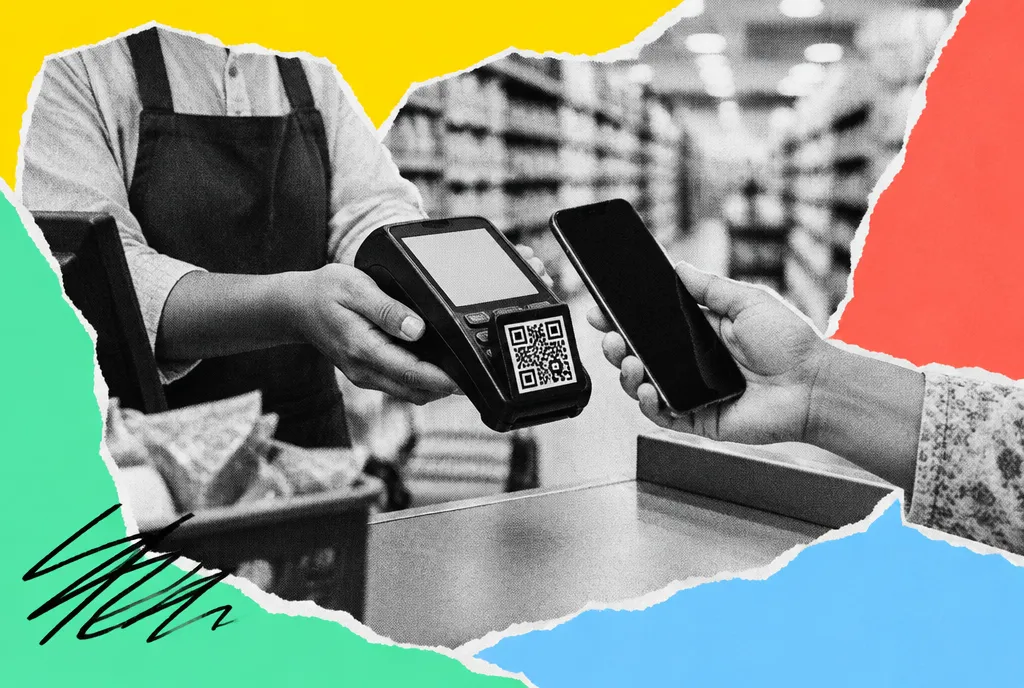
Changes to payment rules are written for banks, card networks and payment companies. Their effects arrive at the checkout counter, where a cashier has a queue and a terminal that either works or does not. The distance between a regulatory circular and a smooth transaction is covered by a chain of intermediaries, and retailers carry much of the operational load.
How payment rules travel
A new requirement usually lands first with acquiring banks and payment aggregators, the firms that process a merchant's card and digital payments. They update their systems, then pass requirements to terminal providers and to the software that runs on the retailer's point of sale. The retailer's role depends on how its checkout is built. A store using a standalone bank terminal may need only a software push from the provider. A chain with integrated POS, where till and terminal exchange data, may need its own development and testing.
Each layer works to its own schedule. Retailers that depend on a single acquirer or software vendor can find their readiness set by someone else's release calendar.
What changes at the counter
- Transaction flow. Extra authentication steps or new prompts add seconds to each payment, which compounds into queue length at peak hours.
- Refunds and reversals. Rules on how money is returned can change the process for exchanges, partial returns and failed transactions.
- Receipts and records. Limits on what data may be stored, printed or displayed affect receipt formats and back-office reconciliation.
- Merchant costs. Changes to fees or settlement timing alter what the retailer receives and when.
Staff training is the step most often underestimated. A cashier who does not know why a transaction is failing will ask the customer to try another method, and the sale may be lost. Clear scripts and escalation routes matter as much as the technical update itself.
What operators should weigh
Larger chains test changes in a few stores before a full rollout, and track failure rates by payment method and terminal type. Smaller retailers and kirana stores, which rely heavily on UPI QR codes and a single terminal, rarely have that capacity. For them, the provider's communication and support quality is the practical safeguard.
The evidence that a change has been absorbed is measurable: transaction success rates, average payment time, refund turnaround and the volume of customer disputes. Retailers that already record these figures can see an implementation problem within days rather than learning about it from complaints.
The decision worth making before the next rule arrives is structural. Retailers with more than one acquiring partner, and a checkout that can switch between them, hold leverage over timelines and costs. Those tied to a single provider inherit its pace.
Questions this story answers
How do new payment rules affect retail stores?
They can change transaction flow through extra authentication steps, alter how refunds and reversals work, limit what data may be stored or printed on receipts, and change fees or settlement timing. Each affects queues, back-office reconciliation and what the retailer receives and when.
Does an integrated POS make payment rule changes harder?
It can. A store using a standalone bank terminal may need only a software push from the provider. A chain with integrated POS, where till and terminal exchange data, may need its own development and testing, and its readiness can depend on a vendor's release calendar.
How can a retailer tell if a payment change has worked?
Track transaction success rates, average payment time, refund turnaround and the volume of customer disputes. Retailers that already record these figures can spot an implementation problem within days rather than learning about it from complaints. Larger chains also test in a few stores first.