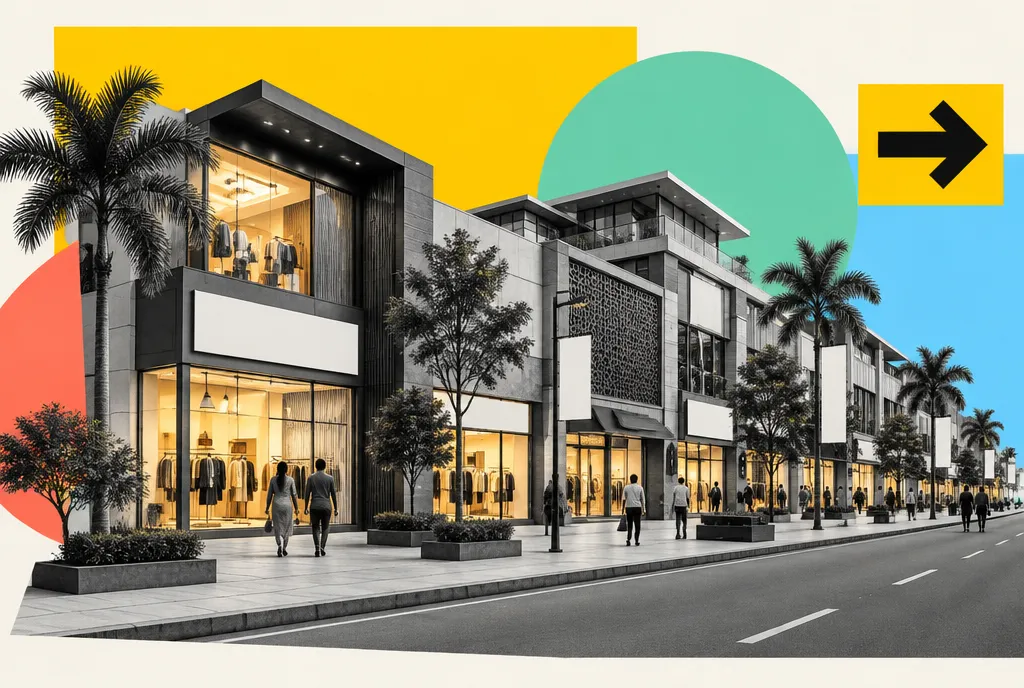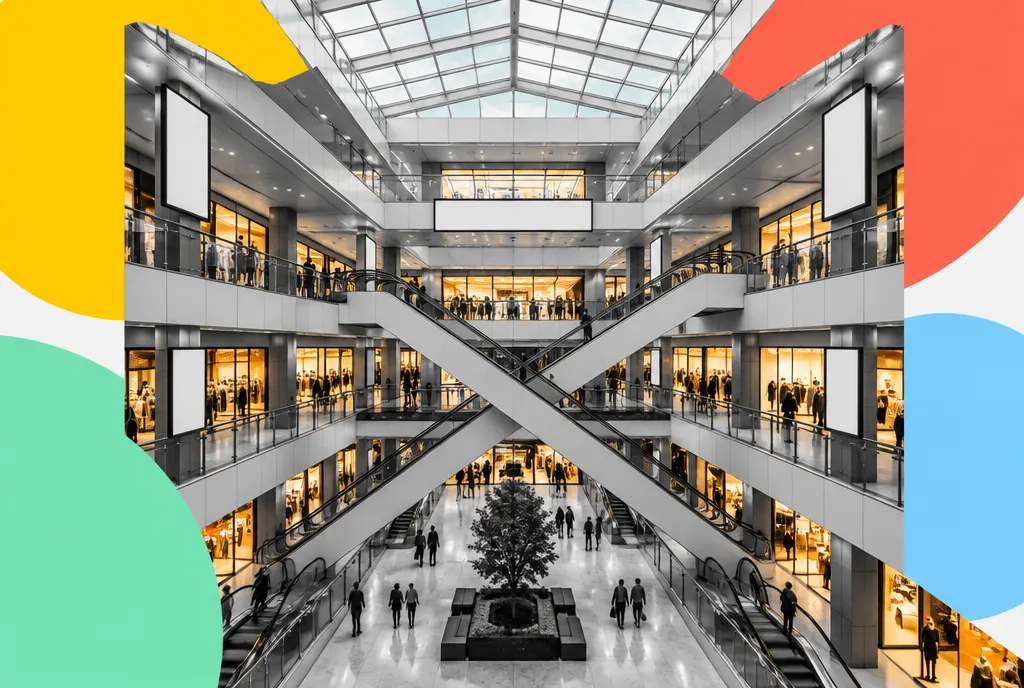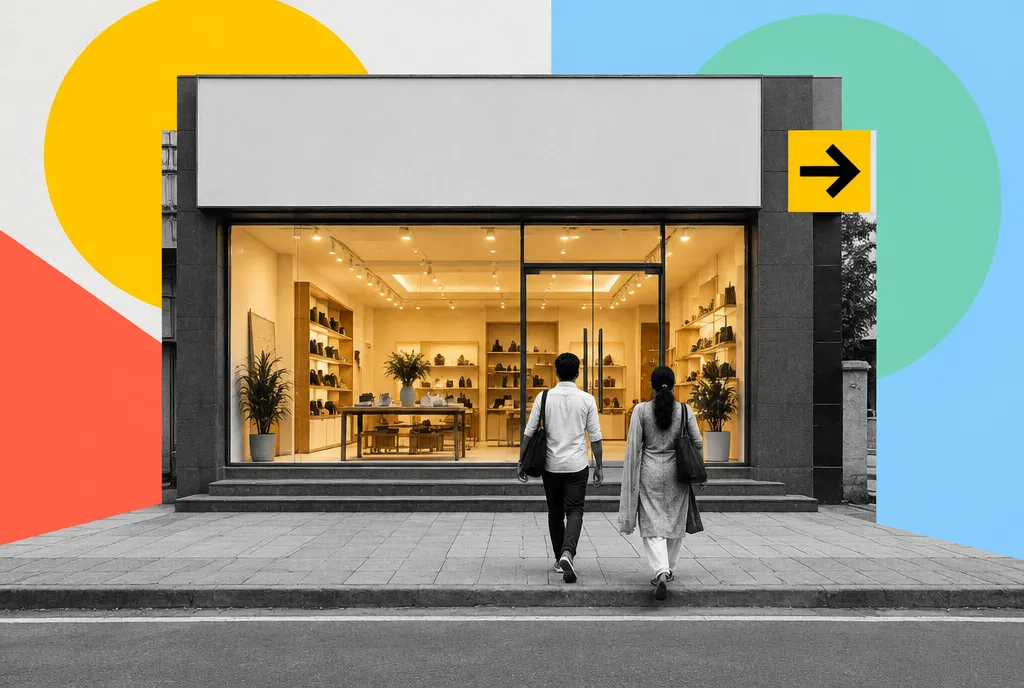
A storefront has a few seconds to do its work. A pedestrian walking at normal pace passes a typical shop frontage quickly, and in that time the store must be seen, understood and judged worth entering. Storefront design choices made at the threshold decide how many of those passers-by become visitors.
The four jobs of a storefront
Retail designers tend to break the frontage into a few functions, each with its own trade-offs:
- Visibility. Can the store be seen from a distance and from an angle, not just head-on? Projecting signs, lighting and contrast with neighbouring frontages all matter, as do obstructions such as parked vehicles, trees and hoardings.
- Legibility. Does a passer-by understand what the store sells and at what price level? A clear category signal often matters more than a brand name the shopper may not recognise.
- Access. Is the entrance easy to approach? Steps, narrow doors, heavy glass and security barriers all add friction. Level, open entrances lower the psychological cost of stepping inside.
- Invitation. Windows and the first few metres inside the door show what the store is like. Cluttered windows can hide the offer, while empty ones can make a store look closed.
Indian high streets add their own conditions. Footpaths are often crowded or uneven, frontages compete with dense signage from neighbours, and municipal rules on sign size vary between cities. Stores in malls face a different problem: uniform frontage rules mean differentiation comes from lighting, depth and window merchandising rather than signage.
Why conversion claims need care
Storefront redesigns are often credited with sharp improvements in footfall or sales. Those claims deserve scrutiny. A redesign usually coincides with other changes: a refurbished interior, new stock, a launch promotion or simply the novelty of a fresh look. Seasonal swings can easily be mistaken for design effects.
A credible test would compare passer-by counts with entry counts before and after the change, ideally against a similar store that was not redesigned over the same period. Door counters, camera-based pedestrian counts and point-of-sale data together give a clearer picture than any one source. Even then, the effect may fade once the novelty wears off, so measurement needs to run long enough to separate a lasting change from a launch bump.
What operators weigh in storefront design
Frontage changes are capital costs, often constrained by landlord approvals and lease terms. A retailer with a short lease may not recover the investment. A chain rolling out a new frontage design across many stores faces a bigger question: whether one design works across very different streets and catchments.
The useful discipline is to treat storefront design as a hypothesis, not a certainty. Retailers that pilot changes in a few locations and measure entry rates honestly will spend their capital where it actually moves people through the door.
Questions this story answers
What are the key elements of storefront design?
Designers break the frontage into visibility, legibility, access and invitation. The store must be seen from a distance and an angle, signal what it sells and at what price level, offer an easy entrance and use windows that show the offer without clutter.
Does a storefront redesign increase sales?
Claims deserve scrutiny. Redesigns often coincide with a refurbished interior, new stock, a launch promotion or simple novelty, and seasonal swings can be mistaken for design effects. Any lift may also fade once the novelty wears off.
How should retailers measure a storefront change?
Compare passer-by counts with entry counts before and after the change, ideally against a similar store that was not redesigned over the same period. Door counters, camera-based pedestrian counts and point-of-sale data together give a clearer picture than any one source.