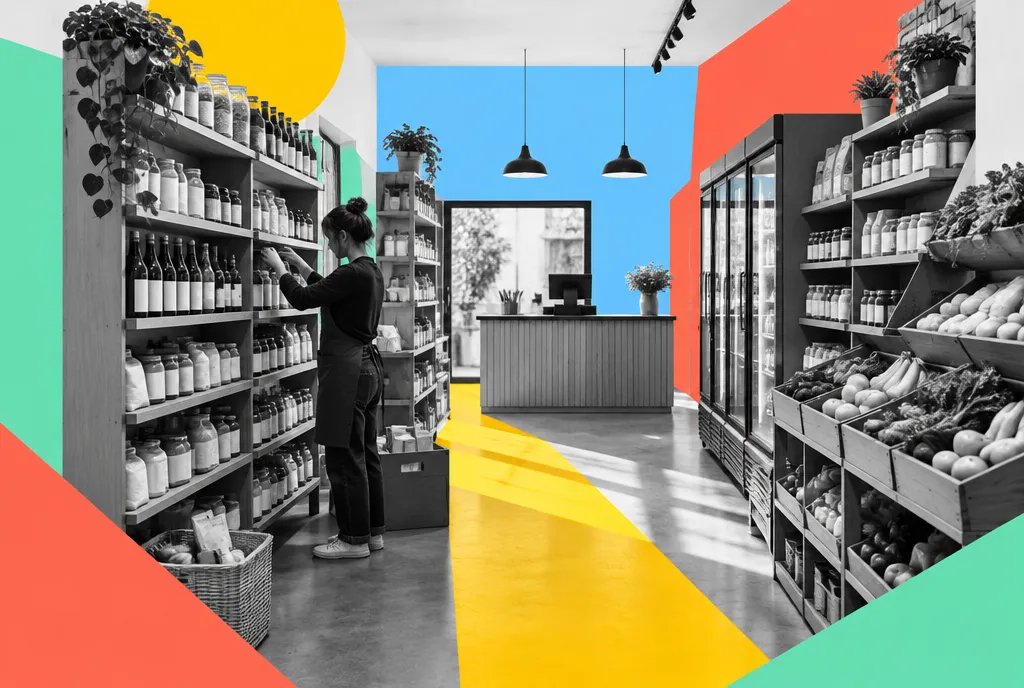
A small-format grocery store looks simple from the aisle: a few thousand products, a counter and a handful of staff. Behind it sits one of the tightest operating models in retail. With limited space, every shelf has to earn its place, and small inefficiencies show up quickly in the monthly result.
Space is the scarcest input
A compact store cannot carry the depth of a hypermarket. It has to choose. Category managers allocate shelf space by how quickly products sell and what margin they earn, weighing a fast-moving staple with a thin margin against a slower premium item with a richer one. The usual measures are sales per square foot and gross margin return on inventory, which combines how much a product earns with how quickly it turns.
The consequence is a narrow, deliberate assortment. Shoppers get one or two sizes of a staple rather than six, and local preferences matter more than in larger formats. A store serving a residential catchment will weight fresh produce, dairy and daily essentials differently from one near offices, where ready-to-eat items and beverages carry the basket.
Where the cost sits in a grocery store
The major cost lines for a small grocery store are familiar:
- Rent, which in a good neighbourhood location can be high relative to the sales a small box can generate.
- Staff, who must cover long trading hours, often seven days a week, with little slack for absences.
- Inventory carrying cost, including working capital tied up in stock and losses from expiry and damage.
- Utilities, especially refrigeration, which runs regardless of footfall.
Because the box is small, the store depends on frequent replenishment. That shifts cost upstream to distribution. Chains running many compact stores need dense clusters so that delivery vehicles can serve several outlets on one route. A single isolated store is far more expensive to supply than one sitting within a tight network.
Competition from every direction
Small-format chains compete with the kirana store on proximity and credit relationships, and increasingly with quick commerce on speed. The kirana typically has lower overheads and knows its customers personally. Quick commerce removes the trip altogether. The organised small store has to justify itself on range reliability, freshness, pricing consistency and a clean, predictable shopping experience.
An honest assessment of a small-format store would track sales density, stock turns by category, shrinkage and expiry losses, labour cost as a share of sales and the time taken to reach store-level break-even. It would also compare stores inside dense clusters with outliers to isolate the effect of distribution.
The decision that shapes the format is network density. Operators that open stores where they can support efficient replenishment give each outlet a fighting chance. Those that chase scattered sites for coverage often find the economics fail long before the store matures.
Questions this story answers
What are the main costs of a small grocery store?
Rent, staff covering long trading hours, inventory carrying cost including expiry and damage losses, and utilities, especially refrigeration that runs regardless of footfall. Frequent replenishment also shifts cost upstream to distribution.
How do small grocery stores decide what to stock?
Category managers allocate shelf space by how quickly products sell and the margin they earn, using sales per square foot and gross margin return on inventory. The result is a narrow assortment shaped by local preferences and the type of catchment.
Why does network density matter for small-format grocery?
Compact stores need frequent replenishment, so chains need dense clusters where one delivery route serves several outlets. An isolated store is far more expensive to supply, and operators chasing scattered sites often find the economics fail before the store matures.