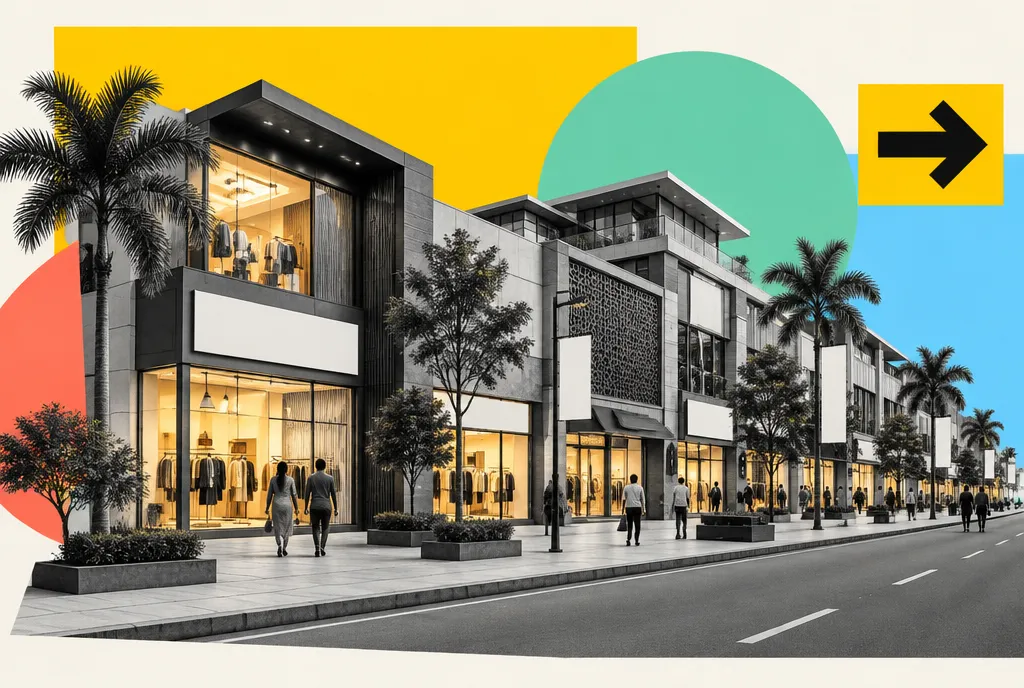
Every Indian city has streets that trade well for decades and streets that never quite settle. The difference is rarely a single anchor store or a clever landlord. A successful high street works as a system, and each part of that system can be observed, measured and, to a degree, managed.
High street footfall is necessary, not sufficient
Pedestrian volume is the first thing operators look at, and the most misleading. A street can carry heavy traffic that never stops: commuters walking to a station, or vehicles passing at speed. What matters is dwell, the share of passers-by who slow down, cross over and enter more than one shop. Streets with wide, unobstructed footpaths, shade, safe crossings and somewhere to park a two-wheeler convert movement into visits far better than streets where walking is a contest.
Purpose also matters. A street anchored by daily needs, such as groceries, pharmacies, banks and schools, earns repeat trips. That routine traffic then supports discretionary categories like apparel, footwear and eating out, which rarely generate enough visits on their own.
Tenant mix is the real product
A shopper experiences a high street as a single offer. If the mix is right, one trip covers several errands and the street earns loyalty that no individual tenant could build. If ten mobile accessory shops sit side by side, each competes for the same wallet while the street loses reasons to visit.
Healthy streets tend to show a recognisable pattern:
- Daily anchors that guarantee frequency, from kirana stores to chemists.
- Comparison clusters where similar shops sit close enough for shoppers to compare, which can strengthen a category rather than dilute it.
- Food and services that extend visits into the evening and weekend.
- A mix of independent and chain tenants, so the street has both local character and the reassurance of known names.
Fragmented ownership complicates this. Unlike a mall, a high street has no single landlord curating tenants, so the mix emerges from hundreds of separate leasing decisions. Rents set by the highest bidder can push out the daily anchors that made the street work in the first place.
What the evidence would need to show
Claims about what makes a street succeed are easy to make and hard to prove. A credible assessment would track pedestrian counts at different hours, vacancy and churn over several years, the category composition of tenants, rental movement and the catchment's household spending. It would also separate a street's own strengths from wider forces, such as a new metro line, a road widening or a mall opening nearby.
For retailers choosing a location, the most useful signals are vacancy duration, how quickly empty units re-let, and whether the replacements are in the same category or a weaker one. A street where daily-needs tenants are being replaced by short-lease, low-commitment occupiers is often declining before footfall numbers show it.
The decision that matters is less about finding the busiest street and more about finding one whose tenant mix is still reinforcing itself. Watch the churn, not the crowd.
Questions this story answers
What makes a high street successful?
A high street succeeds as a system. Footfall must convert into dwell, the tenant mix must let one trip cover several errands, and access such as wide footpaths, shade, safe crossings and two-wheeler parking turns movement into visits.
How can retailers tell if a high street is declining?
Watch vacancy duration, how quickly empty units re-let and whether replacements are in the same category or a weaker one. Daily-needs tenants being replaced by short-lease, low-commitment occupiers often signals decline before footfall numbers show it.
Why does tenant mix matter on a high street?
Shoppers experience a high street as a single offer. A mix of daily anchors, comparison clusters, food and services, and independent and chain tenants earns loyalty no single tenant could build, while ten similar shops side by side compete for one wallet.