Store refits are among the largest discretionary capital decisions a retailer makes. They are also among the hardest to evaluate. A new layout changes how shoppers move, what they see and how staff work, all at once. Separating the return on store design from everything else happening in the store is the central difficulty.
What store design is meant to change
Store design works through a small number of mechanisms. Each can, in principle, be measured:
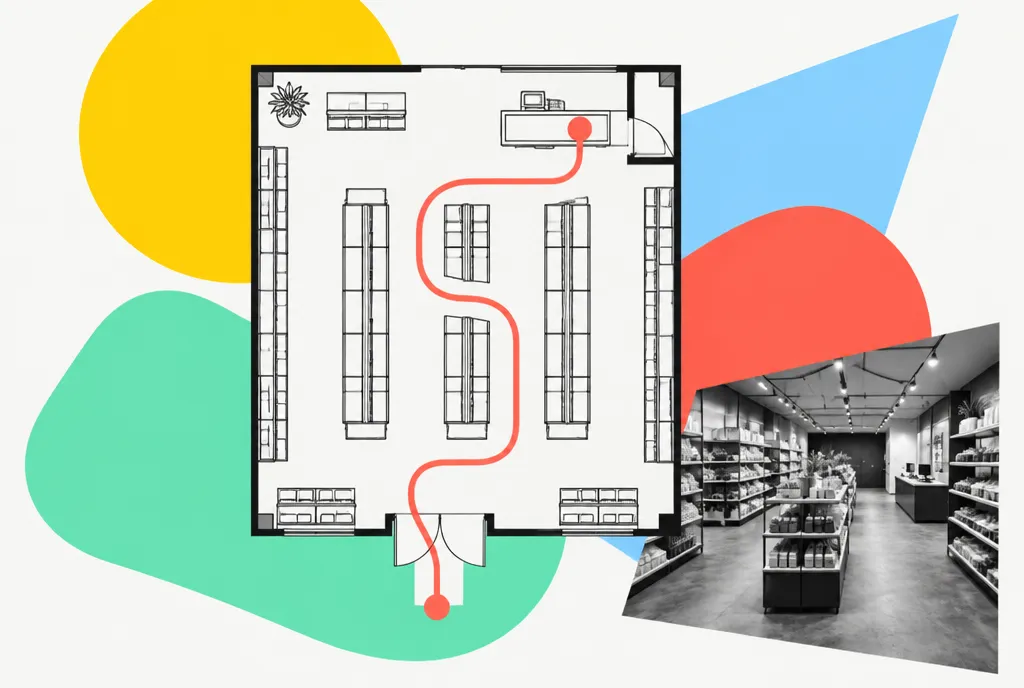
- Conversion, the share of visitors who buy. Clearer navigation, better adjacencies and less congestion can reduce the number of shoppers who leave empty-handed.
- Basket size, through exposure to more categories. A path that leads shoppers past complementary products can lift items per transaction.
- Dwell time, which is useful only if it translates into spending. A confusing layout also increases dwell, for the wrong reasons.
- Sales density, the sales generated per square foot, especially when a refit reallocates space between categories.
- Operating efficiency, including faster replenishment, shorter checkout queues and lower shrinkage from better sightlines.
The last point is often overlooked. A layout that makes restocking easier or lets fewer staff cover the floor can pay back through lower costs even if sales barely change.
Why the return is hard to prove
Refits rarely happen in isolation. Retailers often update the assortment, pricing, lighting and fixtures at the same time, and reopen with promotions. Seasonal patterns, local competition and wider consumer demand all shift sales in ways unrelated to design. Simple before-and-after comparisons tend to overstate the effect.
A sounder approach compares refitted stores with similar control stores over the same period, adjusting for catchment and trading history. Retailers with enough stores can pilot a design in a few locations, measure it against controls, and only then commit to a wider rollout. Footfall counters, point-of-sale data and, where used carefully, in-store movement tracking help build the picture.
How operators weigh the decision
The payback calculation sets the capital cost of the refit, plus any trading days lost during works, against the incremental margin it generates. Lease length matters: a refit needs enough remaining tenure to recover its cost. So does store maturity. A strong store may gain little from a redesign, while a weak one may have problems that layout cannot fix, such as location or catchment.
There is also a portfolio question. Chains often face a choice between refitting existing stores and opening new ones. The refit usually carries lower risk, but only if the evidence shows design is the constraint.
The test worth applying is simple. Before approving a refit programme, ask which mechanism the design is meant to move, how that mechanism will be measured, and what result would justify stopping the rollout.
Questions this story answers
How do you measure the return on a store refit?
Compare refitted stores with similar control stores over the same period, adjusting for catchment and trading history. Pilot the design in a few locations before a wider rollout, using footfall counters, point-of-sale data and, carefully, in-store movement tracking.
Why do before-and-after comparisons overstate store design results?
Refits rarely happen in isolation. Retailers often change assortment, pricing, lighting and fixtures at the same time and reopen with promotions, while seasonality, local competition and wider demand also shift sales in ways unrelated to design.
When is a store refit not worth it?
A refit needs enough remaining lease tenure to recover its cost. A strong store may gain little, while a weak one may have location or catchment problems that layout cannot fix. The case holds only if the evidence shows design is the constraint.