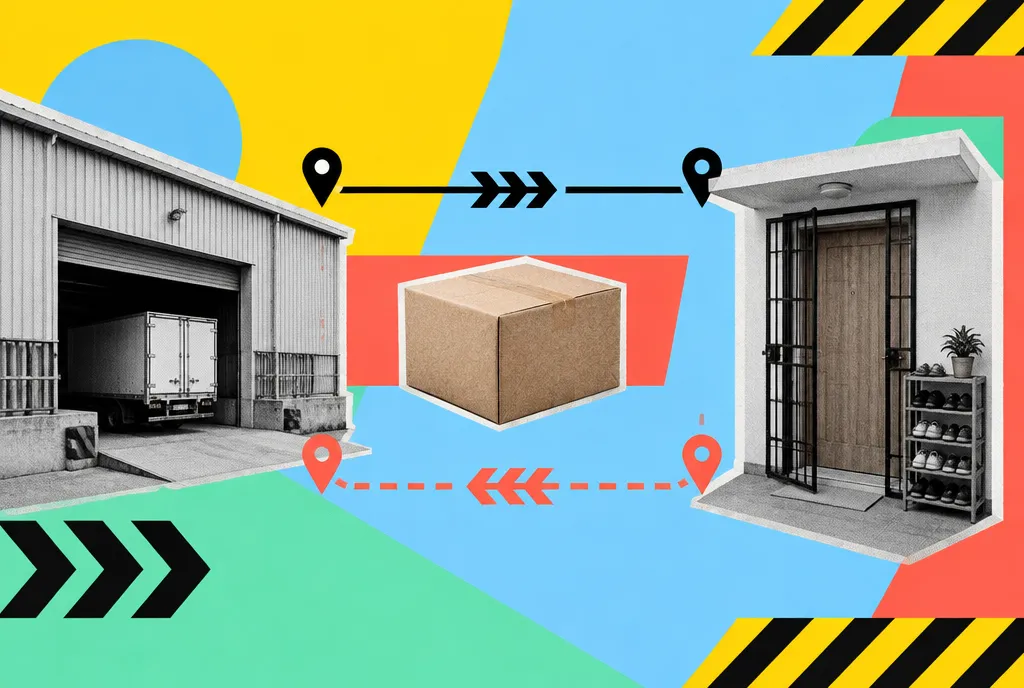
Most supply chains are designed to move goods in one direction: from supplier to warehouse to store or doorstep. Returns reverse that flow, one item at a time, in unpredictable condition and at unpredictable moments. For retailers selling online, reverse logistics is not an afterthought. It is a second operation with its own costs, capacity limits and decisions.
How a return moves
A typical return passes through several stages, each adding cost:
- Initiation, where the customer requests a return and the retailer decides whether to accept it, offer an exchange or issue a refund without collecting the item.
- Collection, through doorstep pickup, a drop-off point or a store counter. Doorstep pickup is the most convenient and usually the most expensive, because it is a single-item trip.
- Transport back to a returns centre, often in smaller and less efficient loads than outbound shipments.
- Inspection and grading, where staff check condition, completeness and authenticity.
- Disposition: restock as new, repackage, refurbish, sell through a clearance channel, return to the supplier, recycle or dispose.
Speed matters throughout. Fashion and electronics lose value quickly, so an item that sits in a returns queue for weeks may miss its selling season or its price point.
Where reverse logistics costs build
The cost of a return includes the original outbound shipping, which is rarely recovered, the reverse pickup, handling and inspection labour, repackaging, and any loss in resale value. Add the refund processing and customer service time, and a returned order can easily cost more than the margin it was supposed to earn.
Categories differ sharply. Apparel and footwear tend to see high return rates driven by fit and sizing. Electronics returns require testing and data handling. Cash-on-delivery orders bring a related problem: orders refused at the door, which incur both legs of transport without a sale.
What operators can control
Retailers address returns at both ends. Upstream, better size guides, accurate product images and honest descriptions reduce avoidable returns. Policy choices, such as return windows, restocking conditions and exchange incentives, shape behaviour. Downstream, regional returns hubs, faster grading and clear disposition rules recover more value from each item.
Some retailers let stores accept online returns. That can lower collection cost and bring customers into the store, but it adds handling work and inventory complexity at store level.
A proper view of reverse logistics would track return rates by category and reason, time from pickup to resale, recovery value as a share of original price and the full cost per return. Few retailers publish such figures, which makes comparisons difficult.
The decision to watch is whether retailers treat returns as a cost to minimise or a process to engineer. Those that design the reverse chain deliberately, with its own capacity and rules, will recover more value from every item that comes back.
Questions this story answers
What are the stages of reverse logistics?
A return moves through initiation, where the retailer accepts it, offers an exchange or refunds without collecting, then collection, transport to a returns centre, inspection and grading, and disposition: restock, repackage, refurbish, clearance, return to supplier, recycle or dispose.
Why are online returns so expensive for retailers?
The cost includes original outbound shipping, rarely recovered, plus reverse pickup, handling and inspection labour, repackaging and any loss in resale value. Add refund processing and customer service time, and a returned order can cost more than the margin it was meant to earn.
How can retailers reduce the cost of returns?
Upstream, better size guides, accurate product images and honest descriptions cut avoidable returns, while return windows and exchange incentives shape behaviour. Downstream, regional returns hubs, faster grading and clear disposition rules recover more value from each item.